For FormBlends compounded peptides, the useful starting point is not whether the internet is excited about it. It is whether the evidence, safety limits, prescription pathway, and follow-up plan are strong enough to support a real patient decision.
Last fall I had a patient, a competitive CrossFit athlete in his late thirties, who had been dealing with insertional Achilles tendinopathy for over two years. He’d done the eccentric loading protocols. He’d done PRP. He’d done shockwave therapy twice. His MRI showed persistent interstitial tearing with neovascularization, and his VAS pain score hadn’t budged in six months. He sat across from me on a telehealth call with three browser tabs open, all about BPC-157, and asked me point-blank: “Is this real, or am I just desperate?”
That question deserves a straight answer. BPC-157 is a research-stage peptide, not FDA-approved for any human indication. The preclinical literature on tendon and ligament repair is genuinely interesting. But “interesting preclinical literature” is doing a lot of heavy lifting in that sentence, and the distance between a promising rat study and a reliable human outcome is roughly the same distance between a garage band demo and a platinum record. The rest of this article walks through what BPC-157 actually is, what the evidence actually says, and what a compounded protocol looks like when a clinician prescribes it for someone who’s run out of conventional options.
The Peptide, the Mechanism, and Why Sports Med Clinicians Care
BPC-157 (Body Protection Compound 157) is a 15-amino-acid peptide fragment originally isolated from a protective protein found in human gastric juice. Pedro Sikiric and his group at the University of Zagreb have been the primary researchers since the 1990s, and most of the published work traces back to that lab or its collaborators.
The proposed mechanism is multi-pronged: upregulation of growth hormone receptor expression in tendon fibroblasts, accelerated angiogenesis via VEGFR2 activation, and modulation of nitric oxide pathways that influence vascular tone around injured tissue. For clinicians who treat chronic tendinopathy, that combination of targets is appealing because the hallmark of a tendon that won’t heal is failed vascular remodeling. The tendon gets stuck in a loop of disorganized neovasculature and persistent matrix degradation.
Here’s the catch. A plausible receptor story is not proof of clinical benefit. Plenty of compounds with elegant mechanisms of action have fizzled when tested in humans. BPC-157 hasn’t had the chance to fizzle or succeed because large-scale human trials simply haven’t been run.
What the Research Actually Shows (and Doesn’t)
The studies clinicians cite most often:
- Sikiric et al. (2018, Current Pharmaceutical Design) reviewed roughly twenty years of preclinical BPC-157 work across muscle, tendon, ligament, bone, and GI injury models, almost entirely in rodents. It’s a comprehensive summary, but comprehensiveness in preclinical review papers can create an illusion of depth that doesn’t exist in human data.
- Chang et al. (2011, Journal of Applied Physiology) showed accelerated Achilles tendon-to-bone healing in rats. The results were statistically significant within that model. Rats are not people, and their tendons heal differently, but this is one of the more methodologically clean papers in the stack.
- Cerovecki et al. (2010, Journal of Orthopaedic Research) reported improved medial collateral ligament outcomes in a rodent transection model.
The boring truth: the overwhelming majority of the BPC-157 evidence base is preclinical. Oral bioavailability in humans remains underexplored. Long-term human safety data is essentially nonexistent. There are no well-powered randomized controlled human trials published to date.
This doesn’t mean the peptide is useless. It means that anyone considering BPC-157 should be able to name the one or two studies most relevant to their specific indication, articulate the limitations of those studies, and have a prescribing clinician who can contextualize the risk-benefit ratio honestly. My opinion: if a clinician tells you BPC-157 is “proven” for your condition, find a different clinician. If a clinician tells you it’s “interesting, preclinical, and we’ll run a defined trial with clear endpoints,” that’s a more defensible conversation.
What a Compounded Protocol Actually Looks Like
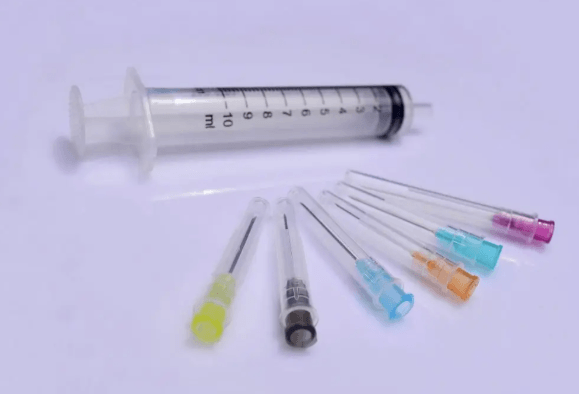
Typical dosing in clinical practice runs 250 to 500 mcg subcutaneously, once or twice daily, often injected near the injury site when anatomically feasible. Trial length is usually four to eight weeks, with reassessment at the end.
A well-structured protocol has five components:
- Baseline labs. For a tendinopathy patient, this usually means inflammatory markers (CRP, ESR), a metabolic panel, and sometimes IGF-1 if the clinician wants to track growth-factor axis effects. The specific panel should match the indication.
- A defined trial window with predetermined endpoints. Before the first injection, the patient and prescriber agree on what counts as a meaningful signal. For my CrossFit patient, we tracked VAS pain scores, single-leg heel raise capacity, and ultrasound changes at baseline and week eight. If you don’t define success criteria up front, you’ll talk yourself into continuing indefinitely based on subjective impressions.
- A patient-specific compounded dispense from a licensed 503A pharmacy, with the prescription, lot number, and beyond-use date on the label.
- A midpoint check-in (usually around week three or four) to review tolerability and flag anything unexpected.
- End-of-trial reassessment with a real decision point. Continue, adjust dose, or stop. Continuation should not be the default. This is research-stage therapy, and open-ended prescribing without reassessment is sloppy medicine.
Patients looking at the standard compounded workflow can review the FormBlends compounded peptides overview, which walks through the prescriber relationship, baseline labs typically requested, dose ranges in clinical use, and reassessment timelines.
Side Effects, Red Flags, and When to Call
The commonly reported side effect profile is mild: injection-site irritation, occasional head pressure, transient fatigue. Published preclinical work hasn’t surfaced a consistent pattern of serious adverse events. That’s somewhat reassuring but also somewhat meaningless, because preclinical safety profiles don’t always predict what happens in humans at therapeutic doses over weeks.
Every patient should know two things before starting. First, which side effects are expected and self-limited (a small wheal at the injection site, mild soreness). Second, which symptoms mean “call the prescriber now, don’t wait.” That list includes any allergic reaction (swelling, hives, difficulty breathing), persistent worsening of the original complaint, any new symptom that doesn’t fit the expected tolerability profile, and any lab value that moves outside the agreed-upon range on reassessment draws.
The Comparison Landscape
BPC-157 doesn’t exist in isolation, and framing it as a standalone fix is a mistake. For chronic tendinopathy patients who’ve exhausted standard rehab:
- TB-500 (thymosin beta-4 fragment) targets actin sequestration and operates through a different repair pathway. Some clinicians combine BPC-157 and TB-500, but combination protocols should be designed by the prescriber, not assembled from Reddit threads.
- Traditional NSAIDs suppress the COX/prostaglandin cascade, which is the same pathway some tissue repair signaling depends on. There’s a legitimate debate about whether chronic NSAID use in tendinopathy actually impairs remodeling. For patients like my CrossFit athlete who’d been on meloxicam for months without improvement, stepping away from NSAIDs and into a time-limited peptide trial felt like a reasonable directional change.
- Eccentric loading, imaging follow-up, and clinician supervision remain the foundation. BPC-157 is one input layered onto a broader plan. It’s not the plan.
Cost and Access in 2026
Compounded BPC-157 through a licensed 503A pharmacy typically runs $80 to $180 per month at standard doses. Telehealth prescriber visits are billed separately, usually $100 to $300 for the initial consultation and a similar range for follow-ups. Insurance does not generally cover compounded peptide therapy for research-stage or off-label indications.
Access is concentrated in telehealth practices that partner with licensed 503A compounding pharmacies. The workflow: intake form, labs (sometimes drawn before the first visit, sometimes ordered after), a video visit with the prescribing clinician, e-prescription to the partnered pharmacy, shipped medication with reconstitution and injection instructions, and a follow-up visit at the end of the trial window.
Who Shouldn’t Touch This
Patients with active malignancy, pregnancy or breastfeeding, undiagnosed wound complications, or those on anticoagulation therapy need specialist evaluation before considering BPC-157. This is a research-stage peptide, not a substitute for evidence-based treatment of active disease. If your condition has a standard-of-care protocol you haven’t completed, do that first.
Frequently Asked Questions
Is BPC-157 FDA-approved? No. BPC-157 is research-stage, not FDA-approved for any human indication. The compounded prescription pathway exists because 503A pharmacies can prepare patient-specific medications based on a prescriber’s order, even when no FDA-approved commercial product exists for that formulation.
How long does a typical BPC-157 trial last? Most protocols run four to eight weeks before reassessment. That reassessment pairs subjective symptom tracking with objective measures: pain scores, functional tests, lab values, or imaging depending on the indication.
What does BPC-157 cost in compounded form? Roughly $80 to $180 per month at standard doses through a licensed 503A pharmacy. Telehealth prescriber visits are separate, typically $100 to $300 for the initial visit with follow-ups in a similar range.
What are the common side effects? Mild injection-site reactions, occasional head pressure, and transient fatigue are the most frequently reported. Published preclinical work has not identified a consistent pattern of serious adverse events. Patients with relevant medical history should review the full side effect profile with their prescribing clinician before starting.
Can BPC-157 be combined with other peptides? Combination protocols (most commonly with TB-500) exist in clinical practice but should be designed by the prescribing clinician. TB-500 acts through a different repair pathway (actin sequestration), and the interaction profile with BPC-157 has not been studied in controlled human trials.
Who should not use BPC-157? Patients with active malignancy, pregnant or breastfeeding individuals, those with undiagnosed wound complications, or patients on anticoagulation therapy should not start a trial without specialist evaluation and documented risk-benefit analysis.
Do I need labs before starting? A responsible protocol includes baseline labs appropriate to the indication. For tendinopathy, that typically means inflammatory markers and a metabolic panel at minimum. Labs at reassessment help determine whether objective changes support continuing, adjusting, or stopping.
Not FDA-approved. Compounded peptides are prepared by licensed 503A pharmacies for individual patients based on a prescriber’s clinical judgment. Individual results vary. This content is educational and does not replace evaluation by a qualified clinician.